Click here for the Japanese version of our homepage.

Compact Thermal Processing with Reduced Energy Consumption
Optimize power and N2 consumption while maintaining stable thermal processing quality and reducing operating costs.
Power consumption and N2 usage in thermal processing can significantly impact daily operating costs. However, many production environments continue using oversized systems without reviewing overall process efficiency.
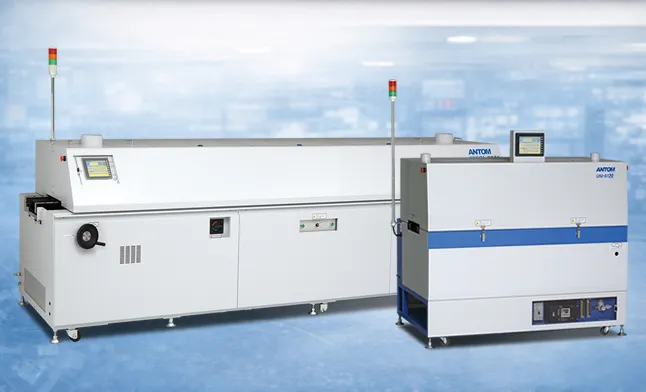
Compact reflow systems improve thermal efficiency and optimize equipment footprint, helping reduce operating costs while maintaining stable and repeatable heating performance.
Running Cost Challenges in Reflow Processing
In reflow processing environments, operational costs often increase gradually without being fully recognized.
- Increased power consumption
- Higher N2 usage
- Energy loss caused by long continuous operation
- Inefficient operation due to oversized equipment specifications
These costs accumulate day by day and can become a significant operational burden over time.
Why do large-scale reflow systems result in higher operating costs?
Large reflow ovens are generally designed for high-volume mass production environments. As a result, they tend to consume excessive energy compared to the actual processing capacity required for prototyping, evaluation, or low-volume production applications.
Higher N2 consumption required to maintain the nitrogen atmosphere
Energy loss caused by excessive heating zones
As a result, large-scale systems can become inefficient for prototyping, evaluation, and low-volume production environments.
How Compact Reflow Systems Reduce Operating Costs
Compact reflow systems are designed to match the required processing capacity while minimizing unnecessary energy consumption.
- Reduced Power Consumption Through Compact Design
By optimizing the heating chamber size, compact reflow systems achieve efficient thermal processing with minimal energy usage while maintaining stable temperature control.
- Optimized Heating Zone Configuration
By using an optimized zone configuration based on the required application, compact reflow systems eliminate unnecessary heating and enable efficient thermal profile control.
- Enhanced Thermal Insulation for Improved Energy Efficiency
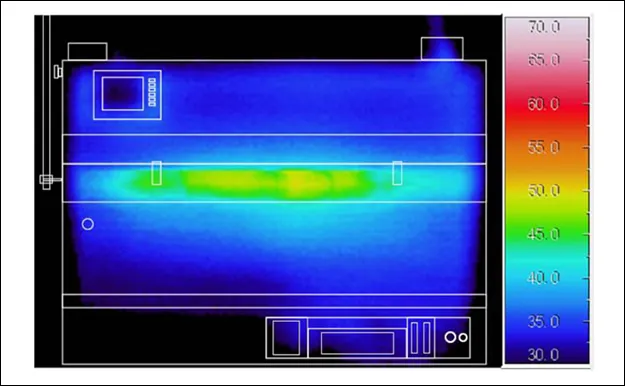
Some ANTOM reflow systems support temperature settings up to 350°C, which is higher than many conventional reflow and thermal processing systems.To minimize external surface temperature despite high operating temperatures, ANTOM strengthened the thermal insulation structure so that the outer panel temperature remains below 50°C even when all heating zones are set to 350°C.
- Reduced Energy Loss Through Faster Temperature Changeovers
In conventional reflow and thermal processing systems, changing from a higher temperature profile to a lower one often requires significant cooling time.In some production environments, operators may attempt to accelerate cooling by opening the oven hood during operation. However, this can create serious safety risks, including burns, while also exposing electrical components to sudden thermal stress that may damage the equipment.
ANTOM compact reflow and thermal processing systems utilize a heating structure designed to significantly reduce temperature changeover time, allowing operators to reach target temperatures more quickly without compromising equipment safety or reliability.
ANTOM Supports More Efficient Thermal Processing for Sustainable Manufacturing
As power consumption increases, CO2 emissions associated with manufacturing operations also rise.
Because reflow and thermal processing systems are among the highest energy-consuming equipment used in production environments, improving thermal efficiency can contribute to more sustainable manufacturing operations and reduced environmental impact.
As a pioneer in compact reflow and thermal processing systems, ANTOM continues developing smaller and more energy-efficient equipment designed to reduce power consumption while maintaining stable thermal performance.
By advancing compact thermal processing technology, ANTOM aims to support manufacturers seeking improved operational efficiency, lower energy usage, and more sustainable production environments.
Recognized Under Yokohama City’s Y-SDGs Certification Program
On April 10, 2023, ANTOM was certified as a Standard-level company under Yokohama City’s Y-SDGs certification program in recognition of its efforts toward sustainable business activities.
ANTOM will continue supporting sustainable manufacturing and responsible thermal processing solutions through ongoing technological development and corporate activities.
You can see the hybrid heating method, which combines low-temperature hot air and far-infrared rays, in action with the actual device.
As mentioned earlier, all of Antom’s reflow ovens, drying ovens, and curing ovens employ a hybrid heating system that combines hot air and far-infrared radiation. Therefore, you can see this hybrid heating system using the demo unit permanently installed in our demo room.
If you have any problems with your current heating system, please feel free to contact us.
If you have any problems or concerns regarding heating processes such as reflow, drying, or curing, please feel free to contact us. We welcome inquiries about products equipped with our unique heating methods, and we can also conduct evaluations and verifications using actual equipment in our demo room.
First, please select your inquiry item from the banner below and contact us using the inquiry form on each page.